Lead Pearl Harbor Bomber Becomes Christian After Reading Tract
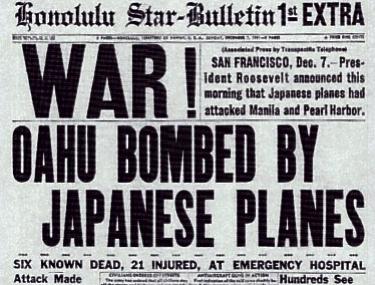
“THE DATE WHICH WILL LIVE IN INFAMY” is today, December 7, which is the 81st anniversary of the bombing of Pearl Harbor where over 2,300 people died and 1,100 were injured. It was a Sunday morning when the sneak attack by Japanese bombers was perpetrated on Pearl Harbor in Oahu, Hawaii. This terrorist action propelled the U.S. into World War 2.
This is the incredible story of Mitsuo Fuchida, lead pilot of the December 7, 1941, raid on Pearl Harbor. Fuchida was the one who shouted the war cry, “Tora, Tora, Tora!”

Mitsuo Fuchida fought the United States throughout WWII and was intimately involved in the planning and leadership of the Japanese war effort as flight commander and later as a senior operations officer.
After the war, Fuchida was a defeated warrior in occupied Japan, farming to meet the needs of his family. He was also the only one to return to Japan after the bombing.
In 1950, Fuchida miraculously came to know Jesus Christ as Savior through a tract handed to him while exiting a train in Tokyo. The tract was entitled, “I Was a Prisoner of Japan,” written by Jacob DeShazer who was one of the famous Doolittle Raiders. DeShazer trusted Christ as his Savior while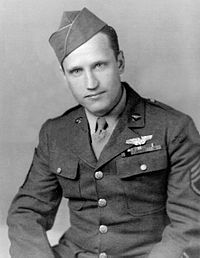 held captive by Japan for 40 months. DeShazer went to Japan in 1948 as a missionary and preached to the nation who held him captive.
Fuchida faithfully served Jesus Christ as an evangelist until his death in 1976. “From Pearl Harbor to Golgotha” is Fuchida’s testimony of salvation. Here it is in his own words:
I must admit I was more excited than usual as I awoke that morning at 3:00 a.m., Hawaii time, four days past my thirty-ninth birthday. Our six aircraft carriers were positioned 230 miles north of Oahu Island. As general commander of the air squadron, I made last-minute checks on the intelligence information reports in the operations room before going to warm up my single-engine, three-seater “97-type” plane used for level bombing and torpedo flying.
The Manger and the Cross
I saw a wonderful depiction of baby Jesus by the German artist Beate Heinen years ago, and it is the best depiction of the Christmas story I’ve ever seen. The painting is called “The Manger and the Cross.”
The newborn Christ-child is in a feeding trough that looks like a coffin. Outside is a path that starts with budding trees and green grass, but at the end, the trees are barren, the ground brown and dead. At the foot of three crosses, the land is gray and colorless, a place of death. It’s Golgotha, and this is the path Jesus trod, this was the purpose of his life.
The cradle must include the cross because the cross sheds light upon the cradle. It started in Bethlehem and ended in Calvary. Christmas is really the beginning of Easter. Compare and contrast these two holy days:
When the Christ child was born at Christmas, the wisemen asked, “Where is the one who has been born king of the Jews?” Now His royal title, “King of the Jews,” is affixed to the cross for all to see. In the manger, Christ was weak, frail and dependent—like any baby. On the cross, he’s weak and frail, yet resigned to do his Father’s will—as our Savior. At His birth, something strange happened in the heavens: A star in the night sky. When he was crucified, there was darkness at noon.
Among the first to come to Him at His birth were the Gentile Magi, drawn by the light of the star. The first to respond to the cross was the Gentile centurion, awakened by the shaking of the earth. From the cradle, Jesus was taken away to Egypt, but then returns. In the crucifixion, Jesus dies, seemingly taken from this earth, but is brought back to life, through the resurrection.
At his birth, Joseph and Mary were present. At his death Joseph and Mary were also present, though different people. After his birth, Jesus was laid in a stone-cold trough. After the crucifixion, Jesus was laid in a stone-cold tomb. At Jesus’ birth, Mary wrapped him in cloths and placed him in a manger. After Jesus’ death, Joseph wrapped him in cloths and placed him in a tomb.
Read More